 EN
EN
 AR
AR
 FR
FR
 EL
EL
 HI
HI
 PT
PT
 RU
RU
 ES
ES
 TL
TL
 ID
ID
 UK
UK
 VI
VI
 TH
TH
 TR
TR
 FA
FA
 MS
MS
 AZ
AZ
 KA
KA
 UR
UR
 BN
BN
 GU
GU
 HA
HA
 IG
IG
 KM
KM
 LO
LO
 LA
LA
 MR
MR
 MN
MN
 NE
NE
 SO
SO
 TA
TA
 YO
YO
 ZU
ZU
 MY
MY
 KK
KK
 MG
MG
 KU
KU
 KY
KY
 SD
SD

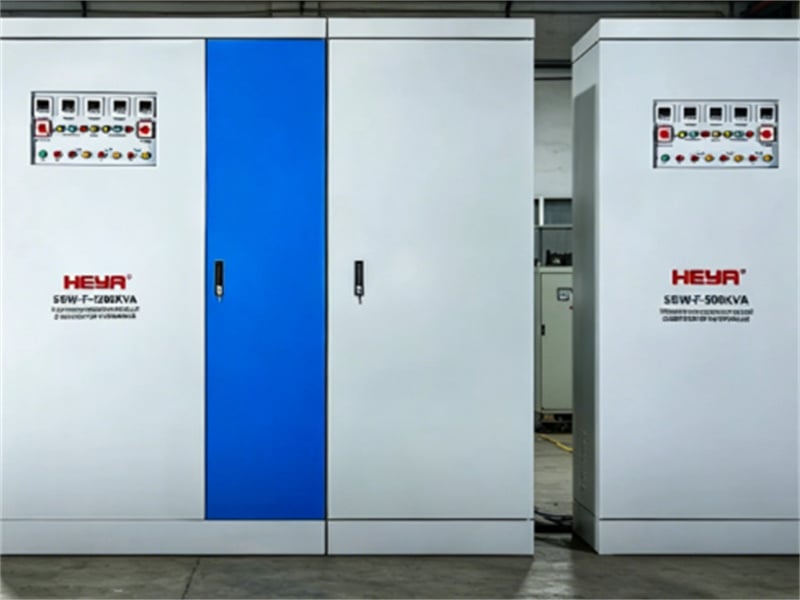
In the healthcare sector, the margin for error is non-existent. Modern hospitals and clinics are filled with sophisticated diagnostic and life-support equipment that is incredibly sensitive to power quality. A momentary dip in voltage or a transient surge can lead to more than just equipment downtime—it can lead to inaccurate diagnoses or the failure of critical care systems. YUEQING HEYUAN ELECTRONIC TECHNOLOGY CO.,LTD (HEYA) understands these stakes, which is why we have developed specialized voltage regulation solutions designed to meet the rigorous demands of the medical industry.
The Critical Need for Stability in Healthcare
Medical equipment such as Magnetic Resonance Imaging (MRI) machines, Computed Tomography (CT) scanners, and surgical lasers require a highly stable and clean power supply to operate correctly. These machines use sensitive sensors and high-speed processors that can be damaged or "confused" by voltage fluctuations.
Key Risks of Unstable Power in Hospitals:
1. Inaccurate Imaging: Voltage instability can cause artifacts in MRI or CT scans, leading to potential misdiagnosis.
2. System Resets: Critical monitors or life-support ventilators may reboot during a power sag, creating a life-threatening gap in patient care.
3. Reduced Equipment Lifespan: Continuous exposure to "dirty" power accelerates the wear and tear on expensive medical electronics.
HEYA’s Technical Superiority for Medical Applications
HEYA’s voltage regulators, particularly our SVC high-precision servo series and SBW high-power series, are engineered with several features that make them ideal for medical environments.
1. Ultra-High Precision (±1%)
Our servo-controlled regulators provide a constant output voltage with a precision of ±1%. This level of stability is crucial for medical devices from brands like GE Healthcare, Siemens Healthineers, and Philips that require a steady voltage to maintain the calibration of their sensitive components.
2. Advanced Protection & Monitoring
Safety is non-negotiable. HEYA medical-grade units are equipped with:
- 120°C Thermal Cutoff: An internal sensor that monitors the 99.99% pure copper windings. If the temperature exceeds 120°C (due to extreme environmental heat or overload), the system executes a safe shutdown in <50ms.
- LCD Display Parameters: Real-time monitoring of Input Voltage, Output Voltage, Load Percentage, and Battery Status (for UPS-integrated models). This allows hospital technicians to verify power health at a glance.
- Over/Under-Voltage Protection: If the grid spikes above 250V or drops below 160V, the regulator reacts instantly to isolate the medical equipment.
3. Response Time and Reliability
In a medical emergency, every second counts. HEYA’s response systems are designed to detect and correct voltage deviations in less than 500ms to 1s (for servo types) and as fast as 15ms for relay-based protection. Furthermore, our use of 99.99% high-purity copper in our transformers ensures that the regulators themselves do not overheat during continuous 24/7 hospital operation.
Case Study: Challenges in the MRI Room
An MRI machine is one of the most significant investments a medical facility can make. During a scan, the machine’s gradient coils draw a massive amount of power in short, aggressive bursts.
- The Challenge: Without a robust voltage stabilizer like the HEYA SBW-150kVA, these power draws could cause a "sag" in the hospital's local grid, triggering a quench or a system shut-down.
- The HEYA Solution: Our SBW series uses compensated technology with high-speed microprocessors to "inject" the necessary voltage back into the line within milliseconds, keeping the MRI's high-field magnets stable. This ensures the imaging electronics (from Siemens or Canon) receive a steady 400V 3-phase supply without deviation.
Total Cost of Ownership (TCO) in Medical Sourcing
For B2B hospital administrators, the TCO of a HEYA stabilizer is significantly lower than budget alternatives:
- Energy Efficiency: Our 99.99% copper toroidal transformers offer >96% efficiency. In a hospital running 24/7, a 3% efficiency gain over an aluminum-core stabilizer can save over $1,200 annually in electricity per unit.
- Repair Costs: One single power-related failure of an MRI controller board can cost $20,000+. A HEYA regulator costing $3,000 provides insurance against this catastrophic expense.
- Uptime Value: In a private clinic, downtime for a CT scanner can lose $500 per hour in revenue. HEYA’s reliability (MTBF > 50,000 hours) ensures maximum billable uptime.
Compliance and Safety Standards
Safety is at the core of HEYA’s manufacturing process. All our medical-grade solutions are compliant with international standards, including CE, ROHS, and EAC. We implement a "Perfect Quality Control" (PQC) system that involves 10-point testing (insulation, load, thermal, etc.) before any unit leaves our factory in Yueqing. This commitment ensures that when a HEYA regulator is installed in a hospital, it performs its duty silently and reliably.
Conclusion: Partnering for Patient Health
Choosing a voltage regulator for a medical facility is not just a procurement decision; it is a commitment to patient safety. With over 15 years of experience in the power supply industry, HEYA offers the technical depth and reliability that healthcare providers trust. From our high-purity copper transformers to our advanced microprocessor control systems with 120°C cutoff protection, every HEYA product is built to protect the machines that protect lives.
For B2B partners and hospital administrators looking to upgrade their power infrastructure, HEYA provides comprehensive OEM and ODM services to tailor solutions to specific facility requirements. Contact us today to learn more about our medical-grade power solutions.